
The Region
This is where the edge is.
East Africa and the Indian Ocean represent one of the world's most complex and highest-potential logistics environments. We've spent years learning exactly how it works — and, more usefully, exactly where it breaks.
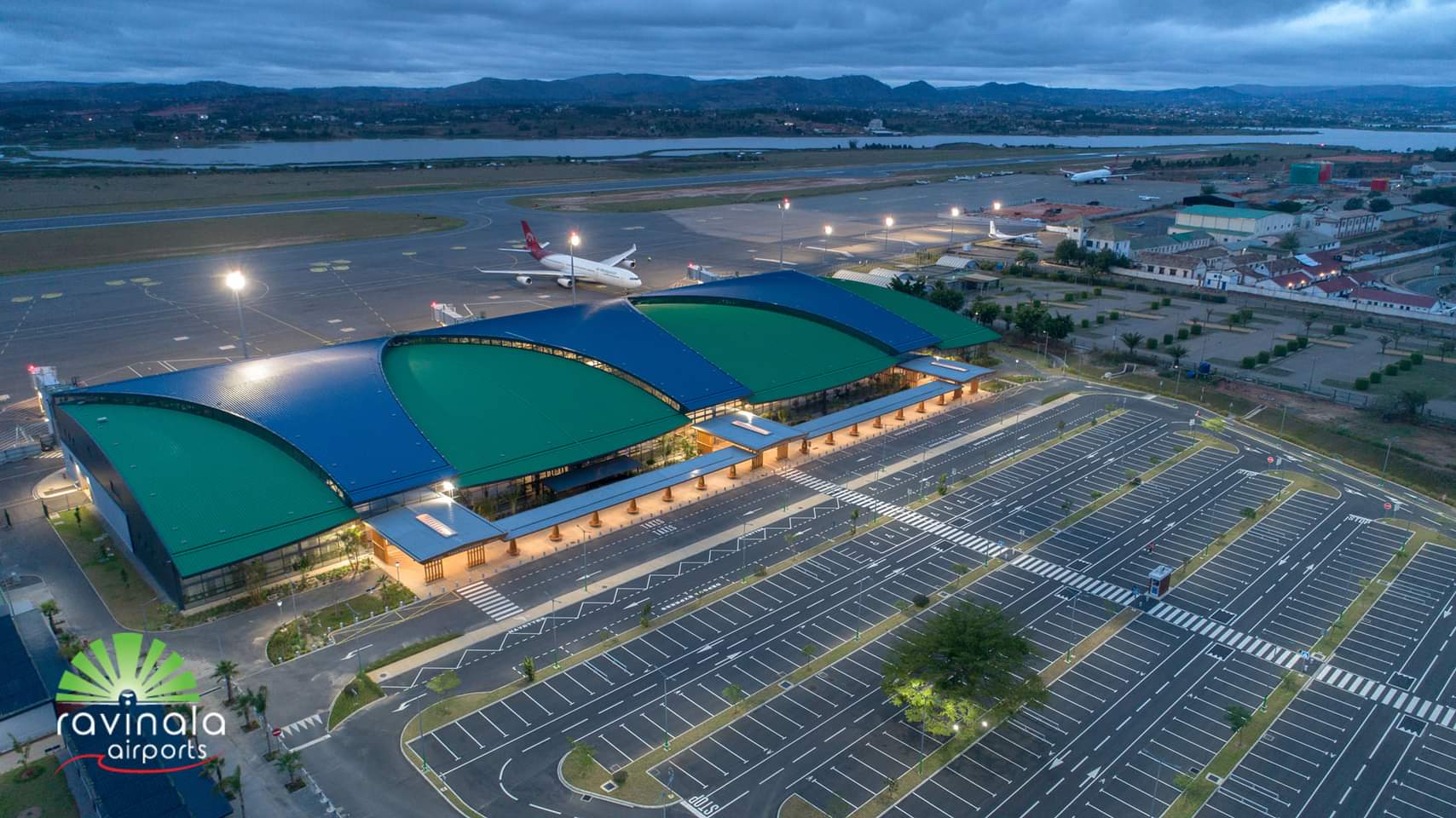
Aéroport d'Ivato · Antananarivo
Why this region
30 to 40 percent above global benchmarks.
That's not geography. That's process. Logistics costs in East Africa run 30 to 40 percent above global benchmarks as a share of revenue. Six major trade corridors remain operationally thin, inconsistent, and relationship-dependent. In markets like Madagascar, the edge doesn't go to the company with the best product — it goes to the company that can reliably get that product there, on time, on cost, on spec, every time.
Major ports
Toamasina
Madagascar
Principal deep-water port. Handles 80%+ of Madagascar's maritime trade. Container, bulk, and general cargo.
Mombasa
Kenya
East Africa's largest port. Gateway to the Northern Corridor — Uganda, Rwanda, DRC, South Sudan.
Dar es Salaam
Tanzania
Central Corridor gateway. Access to Zambia, DRC, Rwanda, and Burundi via rail and road.
Beira
Mozambique
Closest deep-water port to landlocked Malawi and Zimbabwe. Key mineral export route.
Port Louis
Mauritius
Regional hub port. Transshipment point for Indian Ocean islands. Deep-water, efficient, stable.
Trade corridors
Northern Corridor
Mombasa → Nairobi → Kampala → Kigali
Busiest corridor in East Africa. Serves Uganda, Rwanda, Eastern DRC, and South Sudan.
Central Corridor
Dar es Salaam → Dodoma → Kigali / Lusaka
Alternative to Northern. SGR rail expansion improving efficiency. Still road-dominant inland.
Nacala Corridor
Nacala → Nampula → Lilongwe / Lusaka
Mozambique-Malawi-Zambia. Underutilised relative to potential. Key mineral export route.
Madagascar Inland
Toamasina → Antananarivo → Interior
RN2 highway is the main artery. Seasonal disruption risk. Road conditions variable.
Lamu Corridor
LAPSSET: Lamu → Juba / Addis Ababa
Under development. Long-range play for South Sudan and Ethiopia access.
Maputo Corridor
Maputo → Johannesburg
Most developed corridor in the region. Links Mozambique to South Africa's industrial heartland.
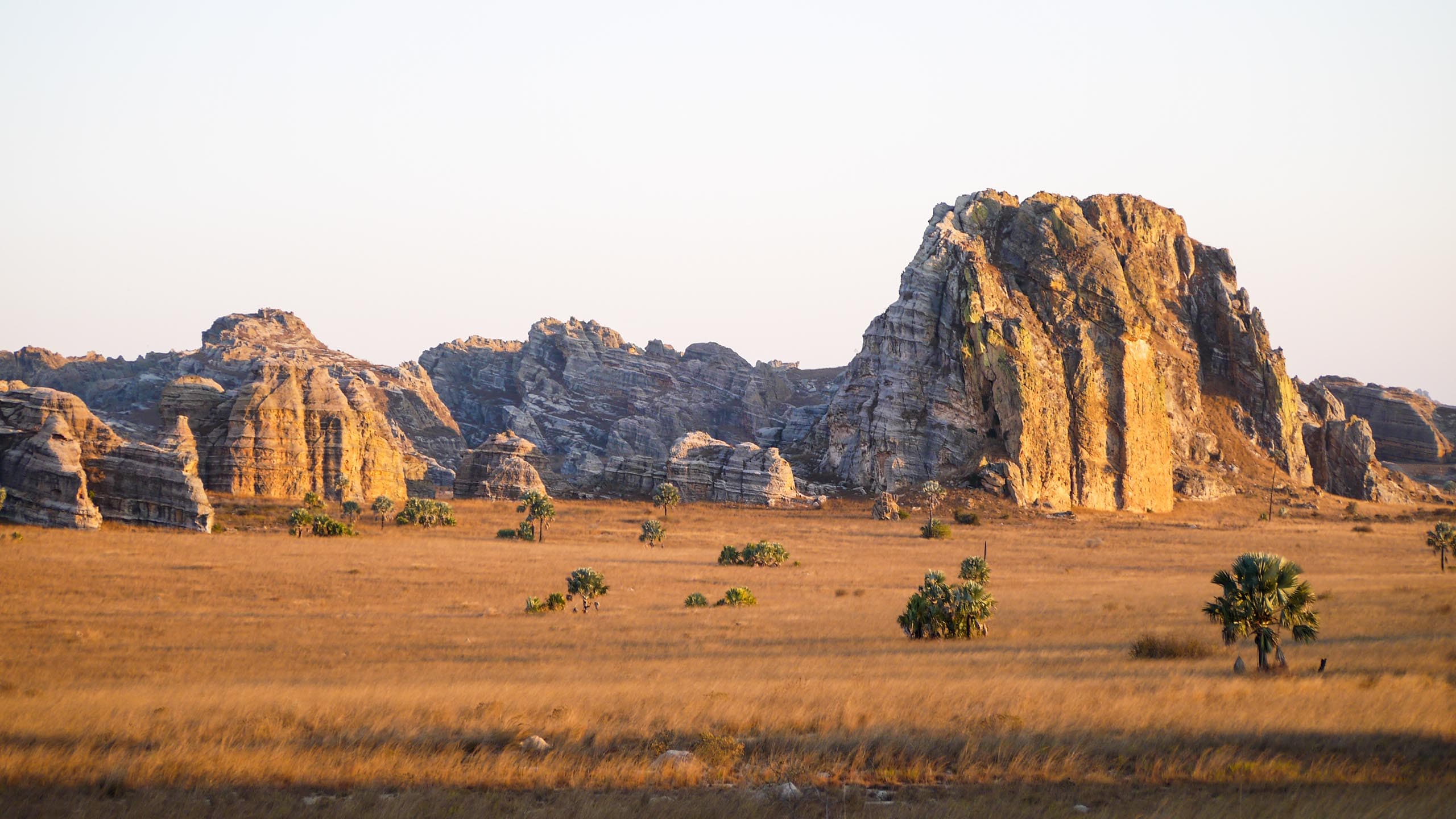
Parc National de l'Isalo · Madagascar
Currencies & hard currency context
All five markets operate with local currencies carrying varying degrees of convertibility risk against USD and EUR. Understanding your currency exposure is part of chain design.
MGA
Malagasy Ariary
Managed float. Limited convertibility. USD and EUR dominate trade contracts.
KES
Kenyan Shilling
Most liquid currency in East Africa. Freely convertible. Regional benchmark.
TZS
Tanzanian Shilling
Managed float. Relatively stable. Bank of Tanzania maintains active FX intervention.
MZN
Mozambican Metical
History of significant depreciation. Hard currency reserves critical for import-heavy operations.
MUR
Mauritian Rupee
Stable and convertible. Strong institutional framework. Regional financial services hub.
Shipping lines active in the region
Major global carriers operate the main lanes. CMA CGM is the only carrier serving all 7 Madagascar ports (30+ years in the Indian Ocean). PIL operates 9 dedicated Africa services. Coverage on secondary and island routes is thinner — frequency, reliability, and contract leverage all vary significantly.
MSC · Maersk · CMA CGM · PIL · Hapag-Lloyd · Evergreen · ONE
India — the source corridor
USD 242 million in annual trade. No direct service. That's where the margin lives.
India is among Madagascar's top five import sources, supplying an estimated USD 242 million in goods annually — textiles, chemicals, rice, machinery, pharmaceuticals. Yet no direct container service connects Indian ports to Toamasina as of 2025. Every shipment transits Colombo (Sri Lanka) or Port Louis (Mauritius). That routing adds 5–10 days and a transshipment handling cost. Operators who understand this gap — and structure their sourcing, timing, and finance instruments around it — hold a structural cost advantage over those who don't. Madagascar ratified the AfCFTA in December 2024 (49th signatory), and the COMESA–EAC–SADC Tripartite Free Trade Area entered force in July 2024. The regulatory environment for India–Africa trade is improving. The operational friction has not yet followed.
USD 242M
India → Madagascar exports
Annual bilateral trade volume (2024 estimate)
5.5%
India's share of Madagascar imports
Significant and growing — behind China, Oman, and France
18–22 days
JNPT → Toamasina
Via Colombo transshipment — no direct service exists
Dec 2024
Madagascar joins AfCFTA
49th signatory — improving continental market access framework

Lémur vari noir et blanc · Madagascar
Mauritius — the hub that earns its position
Financial infrastructure. Freeport status. Full trade finance capability.
Port Louis is not just a transshipment point — it is the most effective financial and logistics hub in the Indian Ocean for businesses routing trade between India, Madagascar, and East Africa. The Mauritius Freeport offers 0% corporate tax on re-export profits, customs duty exemption, and free profit repatriation across 550,000+ m² of declared freeport zones. The financial sector carries USD 55B+ in total banking assets across 19 banks — providing full LC, SBLC, and trade finance capability in USD and EUR. And since April 2021, the India–Mauritius Comprehensive Economic Cooperation and Partnership Agreement (CECPA) — the first India–Africa FTA — gives preferential access for Indian-origin goods transiting Mauritius. A well-structured supply chain can use Port Louis as both a physical optimisation point and a financial structuring jurisdiction.
400K TEU
Port Louis throughput
1M TEU capacity — low congestion relative to regional alternatives
USD 55B+
Banking sector assets
19 banks · Full LC / SBLC / trade finance in USD and EUR
0%
Freeport corporate tax
On profits from re-export and value-add operations within Freeport
Apr 2021
India–Mauritius CECPA
First India–Africa FTA — preferential access for Indian-origin goods
Comoros — emerging trade destination
Strategic location between Madagascar and Mozambique. Untapped potential.
The Union of the Comoros sits in the Mozambique Channel, roughly 300 km off the coast of Mozambique and 400 km from Madagascar. Composed of three volcanic islands — Grande Comore, Mohéli, and Anjouan — the archipelago has two functional ports: Moroni (Grande Comore) and Mutsamudu (Anjouan). Comoros remains a marginal player in Indian Ocean logistics, but its position on the Mozambique Channel shipping lane gives it natural relevance as a potential refuelling, transshipment, or light value-add node. The economy runs on vanilla, cloves, ylang-ylang, and subsistence agriculture. Trade volumes are small. Infrastructure is limited. But for operators already managing Madagascar–Mozambique flows, Comoros is a known unknown — worth tracking as the region matures.
Moroni · Mutsamudu
Two functional ports
Grande Comore and Anjouan — limited berth depth, no container gantry
~300 km
Distance to Mozambique coast
Positioned on the Mozambique Channel shipping lane
Operational climate
Climate directly affects logistics windows. Cyclone season, rainy season, and road conditions are operational variables — not footnotes.
Madagascar
Cyclone season: Nov–Apr. RN2 disruption risk peaks Feb–Mar. Port Toamasina exposure to storm swell. Plan inbound inventory accordingly.
East African Coast
Long rains: Mar–May. Short rains: Oct–Dec. Road conditions on unsealed corridors degrade significantly. Seasonal volume planning is essential.
Inland Corridors
Altitude and rainfall patterns vary dramatically by corridor. Northern Highland routes perform well year-round. Central lowland routes are seasonal.